Respiratory Therapy

CHART YOUR COURSE
BECOME A respiratory therapist
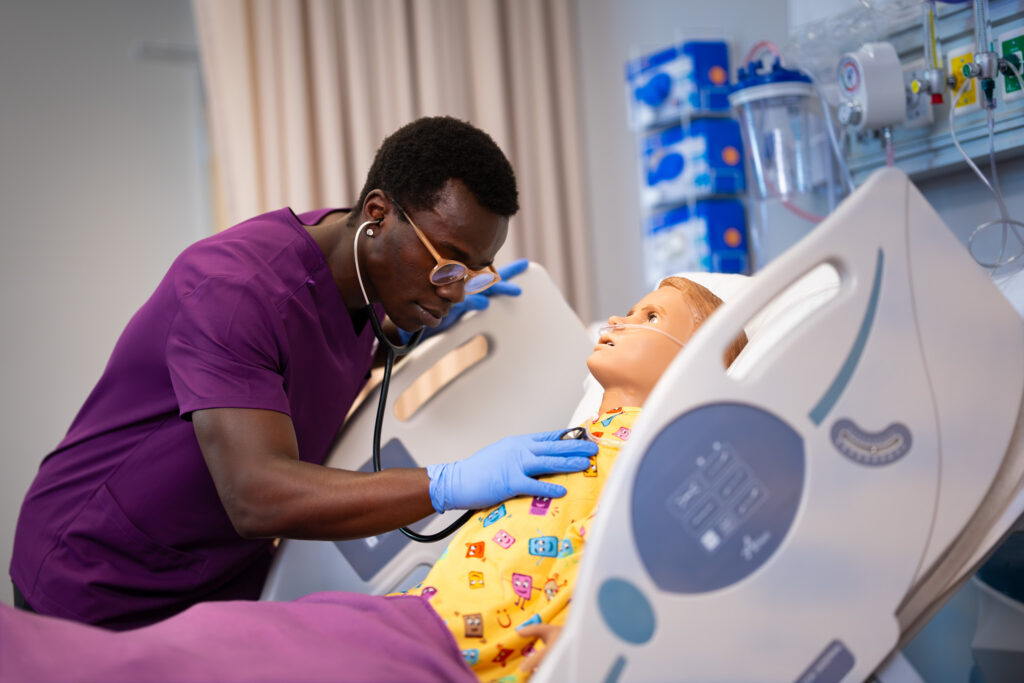
As a respiratory therapist, you’ll play a critical role in assessing, treating, and managing patients with cardiopulmonary conditions. Mercy Health Sciences University’s hybrid Associate of Science in Respiratory Therapy major combines online coursework, hands-on laboratory training, simulation experiences, and supervised clinical education to prepare you for a rewarding healthcare career. You’ll develop the knowledge, clinical skills, and professional competencies needed to provide safe, effective, and compassionate respiratory care alongside physicians and other healthcare professionals. Graduates are prepared to pursue careers in hospitals, clinics, physicians’ offices, rehabilitation centers, home healthcare, and long-term care facilities, helping patients of all ages breathe easier and live healthier lives.
Median Wage1
Program Length
Online Coursework
Projected Job Growth from 2025 – 20351
Our body of work
ABOUT OUR Respiratory Therapy MAJOR
Our three-semester hybrid Associate of Science in Respiratory Therapy combines online coursework, hands-on lab experiences, simulation training, and clinical education to prepare you for a career in respiratory care. Through this comprehensive program, you’ll gain the knowledge, skills, and confidence to assess, treat, and manage patients with cardiopulmonary conditions in a variety of healthcare settings.
PROGRAM FORMAT
- Coursework: 100% asynchronous online
- Skills Labs: In-person at Mercy Health Sciences University in Des Moines, Iowa
Fridays: 7:00 am – 5:00 pm - Clinicals: Hands-on experiences across central Iowa
Application Deadline: May 15
Mercy Health Sciences University is currently seeking Commission on Accreditation for Respiratory Care (CoARC) accreditation for a respiratory care program. However, Mercy Health Sciences University can provide no assurance that accreditation will be granted by the CoARC.
Our respiratory therapy faculty team includes a full-time program chair and a clinical coordinator, as well as many medical professionals in clinical settings. Our full-time liberal arts and science faculty members are PhD-prepared and adept at integrating their subject matters into a comprehensive health science curriculum. As a student, you will receive an exceptional level of personalized instruction from experienced educators dedicated to your success.
English isn’t my parents’ first language, but everyone at Mercy Health Sciences University went above and beyond to make sure we understood the admissions and financial aid processes. The hands-on learning opportunities in my classes have been a huge help in preparing me for my licensure exams and setting me on my path to a successful career.
Irma S., Diagnostic Medical Sonography and Healthcare Administration Candidate, 2021

STEP ONE: UNIVERSITY ADMISSION
To be considered for admission to the Respiratory Therapy major, you must first be admitted to Mercy Health Sciences University. Learn more about admission to Mercy Health Sciences University. Complete our online Mercy Health Sciences University application. Early application is encouraged. Once admitted to Mercy Health Sciences University, you may enroll in Core requirements or prerequisite classes prior to your admission to any academic major. If you are transferring credits, please visit our transfer page to learn more.
STEP TWO: PROGRAM ADMISSION
To be considered for admission to the Respiratory Therapy major, applicants must meet the criteria below. Admission to the University does not guarantee admission to a major. Class size is limited.
- Complete the program application by May 15.
- Successful completion of program prerequisites prior to the technical portion of the program and must earn a grade of “C” (not C-) or higher in the following college-level courses:
- BIO 180 Human Anatomy (w/Lab) 4 credits
- BIO 185 Human Physiology (w/Lab) 4 credits
- MED 101 Medical Terminology
- ENG 101 English Composition I
- College-Level Math (100 level or higher)
- Grade Point Average on a 4.0 scale:
- All applicants must have a minimum cumulative GPA of 2.8
- All Mercy Health Sciences University Core requirements must be completed prior to beginning the Respiratory Therapy major except for SVL 285, Servant Leadership. Students who have earned a previous Bachelor’s, Associate of Arts (A.A.), or Associate of Science (A.S.) degree are considered to have met all Mercy Health Sciences University Core requirements except for Servant Leadership.
Applicants who meet the above requirements for first-time college and transfer students will be invited via email to attend a mandatory information session detailing further program admission requirements.
The following courses are required to earn your Associate of Science in Respiratory Therapy.
Semester 1
RES 120 – Intro to Respiratory Care (3 cr)
RES 155 – Cardiopulmonary Therapeutics w/ Lab (4 cr)
RES 175 – Respiratory Diagnostics w/ Lab (4 cr)
RES 180 – Clinical I (2 cr)
Semester 2
RES 222 – Airway Pharmacology (2 cr)
RES 255 – Comprehensive Care w/ Lab (3 cr)
RES 280 – Clinical II (2 cr)
RES 180 – Advanced Respiratory Therapy w/ Lab (4 cr)
RES 380 – Clinical III (2 cr)
Semester 3
RES 325 – Neo/Peds Respiratory Care w/ Lab (3 cr)
RES 480 – Clinical IV (3 cr)
RES 352 – Professional Issues and Leadership (2 cr)
RES 490 – Preceptorship (4 cr)
SVL 285 – Servant Leadership (3 cr)
*Schedule subject to change, check back for updates.
TOTAL: 69 CREDITS FOR ASSOCIATE DEGREE
The Respiratory Therapy major offers one start date per year in the fall. View our full academic calendar for exact semester start dates. Pre-requisites and Core requirements may be completed at Mercy Health Sciences University year-round.
Mission Statement:
The mission of the respiratory therapy program is to prepare graduates as knowledgeable, competent, and professional entry-level respiratory therapists dedicated to improving the lives of those they serve.
Goal:
To prepare graduates with demonstrated competence in the cognitive (knowledge), psychomotor (skills), and affective (behavior) learning domains or respiratory care practice as performed by registered respiratory therapists (RRTS).
Student Learning Outcomes
Upon completion of the Associate Degree Respiratory Therapy Program, graduates will:
- Demonstrate competency in delivering safe, effective respiratory care across the lifespan.
- Apply critical thinking and clinical judgment in patient assessment and treatment.
- Integrate evidence-based practices into respiratory care.
- Communicate effectively with patients, families, and healthcare teams.
- Demonstrate professionalism, ethical behavior, and cultural competence.
- Utilize technology and diagnostic data to support patient care decisions.
- Meet entry-level respiratory therapist competencies required for credentialing and employment